CGM and Peptide Therapy: Why Continuous Glucose Monitoring Changes Everything About Tracking Your Response
By Lilian E.
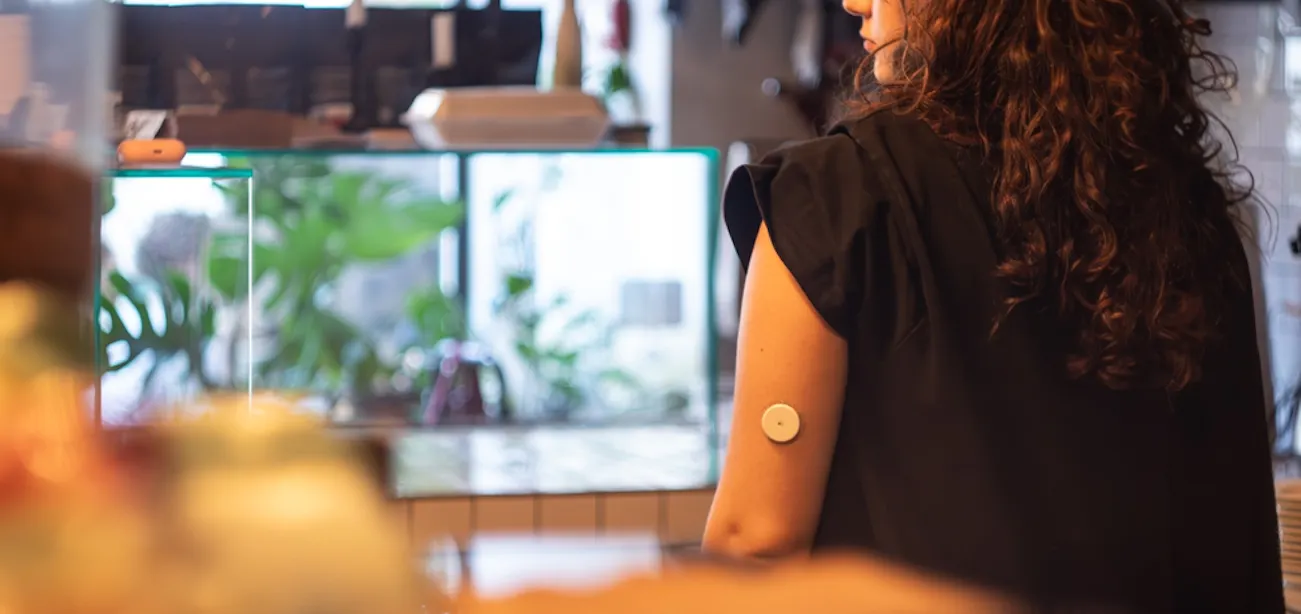
If you're on a peptide protocol and relying on quarterly labs to track your response, you're flying mostly blind.
CGM peptide therapy glucose monitoring solves this. A continuous glucose monitor gives you a live stream of metabolic data — glucose trends every few minutes, 24 hours a day — that static blood draws simply cannot replicate. For anyone using GLP-1 receptor agonists, growth hormone secretagogues, or metabolic peptides like semaglutide or tirzepatide, this data changes the clinical picture entirely.
This article explains why. How CGM works. What it reveals about your peptide response. And how to use that data to optimise your protocol — not guess at it.
What Is a CGM and How Does It Work?
A continuous glucose monitor is a small wearable sensor — typically placed on the upper arm or abdomen — that measures interstitial glucose levels in real time. Unlike a fingerstick, which captures a single data point, a CGM records a reading every 1 to 15 minutes and transmits it to your phone or a dedicated reader.
Current CGM devices approved for clinical use include the Dexcom G7, Abbott FreeStyle Libre 3, and Medtronic Guardian 4. Each differs in calibration requirements, warm-up times, and sensor wear duration, but all deliver continuous glucose curves rather than isolated snapshots.
What CGM measures:
- Fasting glucose levels upon waking
- Postprandial glucose spikes (rise after meals)
- Nocturnal glucose patterns during sleep
- Glucose variability — how dramatically levels swing throughout the day
- Time in Range (TIR): the percentage of hours your glucose stays within 70–180 mg/dL
Time in Range is increasingly recognised as a more clinically meaningful metric than HbA1c alone. Research published in Diabetes Care demonstrated that TIR correlates strongly with the risk of microvascular complications — independently of HbA1c values — making it a superior real-world marker for metabolic management.¹
Why CGM Peptide Therapy Glucose Monitoring Is Clinically Necessary
Standard peptide protocols use periodic labs: an IGF-1 at baseline, a fasting glucose at 8 weeks, an HbA1c at 12 weeks. These are necessary. They are not sufficient.
Here's the problem. HbA1c reflects average glucose over the prior 90 days. That average can look perfectly acceptable — say, 5.4% — while masking daily glucose spikes to 180 mg/dL after meals and nocturnal dips to 62 mg/dL. A patient can have a normal HbA1c and still spend hours each day in metabolically harmful glucose ranges.
Peptides — particularly growth hormone secretagogues — introduce specific glucose dynamics that periodic labs miss entirely.
Growth hormone (GH) secretagogues and glucose:
GH has a well-established counter-regulatory effect on insulin. It reduces peripheral glucose uptake and promotes hepatic glucose output. Peptides like CJC-1295, ipamorelin, and sermorelin stimulate GH pulses. In metabolically healthy individuals, this is generally well-tolerated. In patients with existing insulin resistance, pre-diabetes, or metabolic syndrome, these GH-mediated glucose effects can be clinically significant — and invisible without continuous monitoring.
A 2020 study in Growth Hormone & IGF Research found that GH administration in adults with GH deficiency raised fasting glucose and reduced insulin sensitivity measurably in the first weeks of treatment, effects that would only be detectable through frequent glucose monitoring.² CGM captures these dynamics as they happen.
GLP-1 peptides and glucose suppression:
On the other side, GLP-1 receptor agonists — including pharmaceutical-grade semaglutide and tirzepatide — are potent glucose-lowering agents. They work by stimulating glucose-dependent insulin secretion, suppressing glucagon, and slowing gastric emptying. CGM reveals exactly how effectively a given dose is blunting postprandial spikes.
This is critical for dose titration. Without CGM, your clinician is titrating a GLP-1 based on how you feel and what periodic labs show. With CGM, they can see your actual postprandial glucose curve after every meal — and know precisely how much glucose-lowering effect each dose increment is delivering.
What GLP-1 CGM Data Actually Tells Your Clinician
GLP-1 CGM data produces a real-time pharmacodynamic profile. This is what it shows:
1. Meal-by-meal glucose response Your postprandial peak and recovery curve following different food types. GLP-1 agonists primarily suppress spikes — CGM confirms whether the dose is sufficient to do so.
2. Glucagon suppression at night GLP-1 peptides suppress hepatic glucose output in part by blocking glucagon release. Nocturnal CGM data tells your clinician whether fasting glucose is being managed effectively between doses.
3. Dose timing optimisation Weekly GLP-1 injections don't produce uniform glucose suppression across 7 days. CGM often reveals that glucose control weakens toward the end of the dosing interval — a finding that can inform whether to adjust dosing frequency or dose amount.
4. Hypoglycaemia detection GLP-1 agonists used alongside other medications, or in patients with significant insulin sensitivity, can produce hypoglycaemia — particularly nocturnal episodes. CGM detects these automatically, often before the patient notices symptoms.
5. Response confirmation For patients titrating up from a starter dose, CGM provides objective confirmation that the dose is working. Subjective reports of reduced hunger are useful; a measurable 30% reduction in postprandial glucose spike is definitive.
The Glucose Variability Problem: Why Averages Lie

One of the most important concepts in CGM-guided therapy is glucose variability — the magnitude and frequency of fluctuations in blood glucose throughout the day.
High glucose variability is an independent predictor of oxidative stress, endothelial dysfunction, and cardiovascular risk.³ Two patients can have identical average glucose values and HbA1c levels while one experiences wide swings (60 to 200 mg/dL) and the other maintains relatively stable levels (90 to 130 mg/dL). Their metabolic risk profiles are completely different.
CGM quantifies variability through metrics like:
For patients on peptide protocols targeting metabolic conditions — including insulin resistance, metabolic syndrome, or weight loss — tracking these metrics across the duration of therapy provides far more resolution than any quarterly lab panel.
CGM Peptide Therapy Glucose Monitoring: How to Set It Up Correctly
Using a CGM effectively within a peptide protocol requires structure. These are the steps your care team should follow.
Step 1: Establish a baseline before starting therapy
Wear the CGM for 10 to 14 days before beginning any peptide. This baseline captures your natural fasting glucose, postprandial patterns, nocturnal behaviour, and variability score. It becomes the reference point against which your response is measured.
Step 2: Synchronise CGM wear with your peptide cycle
If you're on a weekly GLP-1 injection like semaglutide, time CGM sensor changes so you capture a full weekly cycle on each sensor. This allows your clinician to compare glucose control at day 2 (peak drug levels) versus day 6 (approaching trough) within a single data set.
Step 3: Log meals, exercise, and injection times
Most CGM apps allow manual event tagging. Use it. When your clinician reviews your data, meal-tagged glucose curves reveal far more than untagged spikes. The same applies to injection timing — a spike at hour 3 post-injection means something different depending on what you ate.
Step 4: Review data at each clinical check-in
CGM data should be uploaded and reviewed at every follow-up, not just flagged if something goes wrong. Platforms like Dexcom Clarity and LibreView produce standardised Ambulatory Glucose Profiles (AGPs) that give your clinician a single-page summary of your glucose patterns over any selected period.
Step 5: Use CGM to validate lifestyle interventions
Patients frequently wonder whether specific dietary choices — lower-carbohydrate eating, time-restricted feeding, reducing ultra-processed foods — are making a measurable metabolic difference. CGM answers this objectively. It is one of the most powerful behaviour-change tools available because it closes the feedback loop between action and biological outcome.
Metabolic Monitoring Wearables and Peptides: What Else You Can Track
CGM is the most validated metabolic monitoring wearable for peptide therapy, but it does not operate in isolation. A comprehensive monitoring approach for a data-driven patient looks like this:
CGM (primary glucose biomarker) Continuous glucose data as outlined above. Non-negotiable for GLP-1 and GH secretagogue protocols.
Heart rate variability (HRV) — via wearables like Oura Ring or WHOOP HRV reflects autonomic nervous system function. Peptides that improve sleep quality (such as sermorelin or DSIP) often produce measurable improvements in HRV. Declining HRV during a protocol can indicate physiological stress or dose issues.
Resting heart rate and sleep tracking GLP-1 agonists frequently improve sleep quality through indirect mechanisms — reduced nocturnal glucose excursions, reduced acid reflux from lower gastric pressure, and modest reductions in sleep apnoea severity. Wearable sleep tracking captures these improvements quantitatively.
Body composition scans (DEXA) Particularly relevant for patients on growth hormone secretagogues targeting fat loss and lean mass preservation. A DEXA scan at baseline and at 12 weeks provides the body composition data to complement your CGM glucose data.
Periodic labs (not replaced, but contextualised) CGM does not replace your lab panel. It contextualises it. Your IGF-1 level tells you whether your GH axis is responding to a secretagogue. Your CGM tells you what that GH response is doing to your glucose — in real time.
For patients pursuing a full comprehensive metabolic panel, CGM data provides the longitudinal context that a single-point blood draw cannot.
CGM Peptide Therapy Glucose Monitoring: What Non-Diabetic Patients Need to Know
CGM has historically been positioned as a tool for patients with Type 1 or Type 2 diabetes. That framing is outdated.
A growing body of evidence supports CGM use in non-diabetic populations for metabolic optimisation. A landmark 2018 study published in PLOS Biology found that healthy adults without diabetes demonstrated significant glucose variability — including spikes exceeding 140 mg/dL — that correlated with body weight, dietary patterns, and gut microbiome composition.⁴ None of these individuals would have been flagged by conventional glucose screening.
For non-diabetic patients on peptide therapy, CGM does three things conventional testing cannot:
- Identifies subclinical glucose dysregulation — patterns that exist below the diagnostic threshold for pre-diabetes but are clinically meaningful nonetheless
- Detects GH-induced glucose effects early in a secretagogue protocol, before they become problematic
- Provides real-time confirmation that your GLP-1 protocol is working at the dose you're currently on — rather than waiting 90 days for HbA1c
For patients engaging Meto's insulin resistance and prediabetes programme, or those on GLP-1-based weight loss protocols, this is not a peripheral tool. It is central to managing your care responsibly.
Common Patterns CGM Reveals in Peptide Patients

After reviewing continuous glucose data across a range of metabolic patients, several recurring patterns emerge. These are the ones your care team should be looking for.
The dawn phenomenon amplified by GH peptides
The dawn phenomenon — a natural cortisol and GH-driven rise in fasting glucose between 4 and 8 AM — is normal. In patients on GH secretagogues that further stimulate GH pulses during sleep, this rise can be amplified. CGM captures the fasting glucose trajectory from midnight to waking, giving your clinician precise data on whether nocturnal GH stimulation is producing unacceptable glucose elevation.
The GLP-1 tail-off effect
Weekly GLP-1 injections produce a pharmacokinetic curve — peak exposure around days 1 to 3 post-injection, declining through days 5 to 7. CGM frequently shows that postprandial glucose control degrades measurably in the final 48 hours before the next injection. This pattern — which is invisible on periodic labs — often prompts a dose adjustment or timing modification.
The reactive hypoglycaemia signature
Some patients on GLP-1 protocols — particularly those who have reduced caloric intake significantly — develop episodes of reactive hypoglycaemia several hours after eating. The blood sugar rises, triggers an insulin response, and then drops below 70 mg/dL. Patients often report this as afternoon fatigue or shakiness. CGM identifies the mechanism precisely, which changes the dietary and dosing response.
Sleep-disrupting nocturnal excursions
Both high and low nocturnal glucose values disrupt sleep architecture. Patients who report poor sleep quality on otherwise well-tolerated protocols sometimes show nocturnal CGM patterns — dips to 65 mg/dL at 2 AM, or spikes to 155 mg/dL after late eating — that explain the disruption and point to correctable causes.
When to Discuss CGM With Your Clinician
Not every patient on every peptide protocol requires continuous CGM. But the following situations make CGM strongly advisable:
- You are starting a GH secretagogue and have a baseline fasting glucose above 90 mg/dL
- You are on a GLP-1 protocol and titrating dose, particularly above the starter dose
- You have existing insulin resistance, metabolic syndrome, or a family history of Type 2 diabetes
- You have experienced unexplained fatigue, afternoon energy crashes, or disturbed sleep during your protocol
- You are combining a GLP-1 agonist with a GH secretagogue — a dual approach that can produce complex and opposing glucose effects
- You want objective confirmation that your protocol is producing metabolic improvement before your next lab panel
If you are on a clinician-supervised protocol through a platform like Meto, raising CGM as part of your monitoring plan is a clinically reasonable request — and one that more data-driven patients are actively pursuing.
Conclusion
CGM is not a gadget. It is a clinical data layer that your peptide protocol is currently missing.
Continuous glucose monitoring provides the longitudinal, high-frequency glucose data that quarterly labs cannot. For patients on GLP-1 agonists, it reveals dose adequacy, timing effects, and hypoglycaemia risk. For patients on GH secretagogues, it detects the glucose-elevating effects of GH stimulation before they become a clinical problem. For every data-driven metabolic patient, it closes the gap between how you feel and what is actually happening in your metabolism — hour by hour, meal by meal, dose by dose.
Peptide therapy is a precision intervention. Your monitoring approach should match that precision.
Meto integrates real-time biomarker tracking into every peptide protocol — start yours today at meto.co.
FAQ
What is CGM peptide therapy glucose monitoring and who does it apply to?
CGM peptide therapy glucose monitoring refers to the use of a continuous glucose monitor as a real-time tracking tool for patients on peptide protocols — particularly GLP-1 agonists and growth hormone secretagogues. It applies to anyone on a peptide protocol where glucose dynamics are a relevant outcome, which includes most patients targeting metabolic conditions, weight loss, or body composition.
Does a continuous glucose monitor work differently for non-diabetic patients on peptides?
The device works identically regardless of diabetes status. What differs is the purpose. For diabetic patients, CGM primarily tracks disease management. For non-diabetic peptide patients, it serves as a precision biomarker tool — detecting subclinical glucose variability, confirming GLP-1 dose efficacy, and identifying GH-mediated glucose effects that would otherwise be invisible until a quarterly lab reveals them.
Can I use a CGM to figure out if my GLP-1 dose needs to be adjusted?
Yes — and this is one of the most clinically useful applications. GLP-1 CGM data reveals whether your current dose is adequately suppressing postprandial glucose spikes, whether glucose control degrades toward the end of your dosing interval, and whether you're experiencing any hypoglycaemia risk. Each of these findings directly informs dose titration decisions that quarterly labs cannot support.
Will my clinician know what to do with CGM data?
A clinician experienced in metabolic medicine will be comfortable interpreting CGM outputs, including the Ambulatory Glucose Profile (AGP), Time in Range (TIR), glucose variability, and postprandial curves. If your current provider is not using CGM data in the context of your peptide protocol, it is a reasonable and increasingly standard conversation to initiate. Clinicians at Meto incorporate real-time biomarker tracking as part of structured protocol management.
Are there peptides that do not require CGM monitoring?
Peptides with no direct effect on glucose metabolism — such as BPC-157 for tissue repair, or GHK-Cu for skin and inflammatory pathways — do not require CGM monitoring as a standard practice. CGM becomes relevant when a peptide has established effects on the GH axis (secretagogues), insulin secretion (GLP-1 agonists), or glucose regulation more broadly. Your clinician should assess this on a protocol-by-protocol basis.
How long do I need to wear a CGM during peptide therapy?
For baseline assessment, 10 to 14 days of CGM wear before starting therapy is standard. Once therapy is underway, continuous wear during the first 4 to 8 weeks of each titration phase is advisable — this is when dose adjustments are most frequent and glucose effects are most likely to emerge. Long-term, intermittent CGM use every 2 to 3 months (or during any protocol changes) provides ongoing metabolic accountability without the cost of perpetual CGM wear.
Recommended For You

Hexarelin: The Cardioprotective Growth Hormone Peptide That Mainstream Providers Overlook
Hexarelin is the only GHRP with a dual cardioprotective mechanism via CD36 receptors. This deep dive covers the science, protocols, comparisons, and who benefits from this overlooked peptide.

The Exercise and Peptide Protocol: How to Get Maximum Results Combining Training With Therapy
The right exercise peptide therapy protocol doesn't just complement your treatment — it determines your results. This guide covers training type, peptide timing, week-by-week structure, and clinical considerations for GLP-1s, GH secretagogues, and tissue repair peptides.

Peptide Therapy and Cancer: Addressing the Risks, the Evidence, and What Patients Should Know Before Starting
Peptide therapy cancer risk evidence is nuanced — and most telehealth platforms skip the conversation entirely. This article breaks down what the research shows for GLP-1s, GH secretagogues, and BPC-157, who carries elevated risk, and the screening every patient should complete before starting a protocol.