BPC-157 Injection vs Oral Peptide: Injectable, Oral, and Nasal Delivery Methods Compared — Which Is Right for Your Goal?
By Lilian E.
If you're researching how to take BPC-157, the delivery method is not a minor detail. It determines where the peptide goes, how much reaches your target tissue, and whether you get any meaningful effect at all.
Here is the short answer: BPC-157 injection delivers the highest systemic bioavailability, making it the preferred route for musculoskeletal injuries, tendon repair, and systemic healing goals. Oral BPC-157 is the best choice for gut-targeted applications — leaky gut, IBD, gastric repair — because the peptide acts locally where it is most concentrated. Nasal delivery is the least-established route, with emerging interest for neurological and brain-adjacent applications, but limited human data to date.
The right method depends entirely on your goal. This guide breaks down all three — mechanistically, practically, and clinically.
Important: BPC-157 is not FDA-approved for any indication. It is a compounded peptide available only through licensed providers. Work with a qualified clinician before initiating any peptide therapy. See how Meto providers approach peptide therapy.
What Is BPC-157 and Why Does the Delivery Method Matter?
BPC-157 (Body Protection Compound-157) is a synthetic pentadecapeptide — a chain of 15 amino acids — derived from a protective protein found in human gastric juice. It was first characterised in preclinical research for its cytoprotective properties and has since accumulated over 100 peer-reviewed publications across gastroenterology, orthopaedics, and regenerative biology.1
What makes BPC-157 unusual is structural stability. Most peptides are degraded rapidly by gastric acid and intestinal proteases. BPC-157 resists enzymatic breakdown — which is precisely why oral delivery is a meaningful research variable for this compound, not a theoretical one.2
But that stability does not mean every delivery route produces the same result. Where the peptide enters the body determines where it concentrates, how much reaches systemic circulation, and which tissues it can reach at therapeutic levels.
For a broader primer on how BPC-157 works and what the evidence supports, see BPC-157 Peptide Benefits: The Recovery Compound Moving from Bodybuilding to Mainstream Medicine.
BPC-157 Injection vs Oral Peptide: The Core Pharmacokinetic Difference
The central question in the BPC-157 injection vs oral peptide debate is bioavailability — the fraction of the administered dose that reaches systemic circulation intact and at therapeutically relevant concentrations.
Subcutaneous injection bypasses the gastrointestinal tract entirely. The peptide is absorbed directly into the bloodstream and surrounding tissue. Bioavailability is high. The compound reaches distant structures — joints, tendons, muscle, brain — at meaningful concentrations.
Oral delivery routes BPC-157 through digestion. Even with structural resistance to gastric acid, some degradation occurs. More importantly, first-pass metabolism in the liver reduces the fraction that reaches systemic circulation. Oral doses used in animal studies are typically three to ten times higher than equivalent injectable doses to produce comparable systemic effects — suggesting oral bioavailability in the range of 10–30% relative to parenteral delivery.3
That does not mean oral BPC-157 is ineffective. It means the effect is primarily local — concentrated in the GI tract, where the peptide is in direct contact with the tissue it needs to repair.
The practical takeaway:
- Injection = high systemic distribution → tendons, ligaments, muscle, joints, vascular tissue
- Oral = high local GI concentration → intestinal lining, gastric mucosa, gut repair
- Nasal = intermediate systemic delivery → potential neurological targeting, emerging evidence only
Injectable BPC-157: Highest Bioavailability for Systemic and Musculoskeletal Goals
Injectable BPC-157 is the best-studied delivery method for healing applications outside the gastrointestinal tract.
A 2025 systematic review published in Orthopaedic Journal of Sports Medicine, covering 36 studies from 1993 to 2024, found that BPC-157 promotes healing by boosting growth factors and reducing inflammation, with improved outcomes across muscle, tendon, ligament, and bone injury models in animals.4 The peptide enhances growth hormone receptor expression in tendon fibroblasts — a key mechanism for tissue repair and regeneration.5
In the only published human orthopaedic data, seven of twelve patients with chronic knee pain reported relief lasting more than six months after a single BPC-157 injection.4 That is a small sample. But it represents the direction the clinical research is moving.
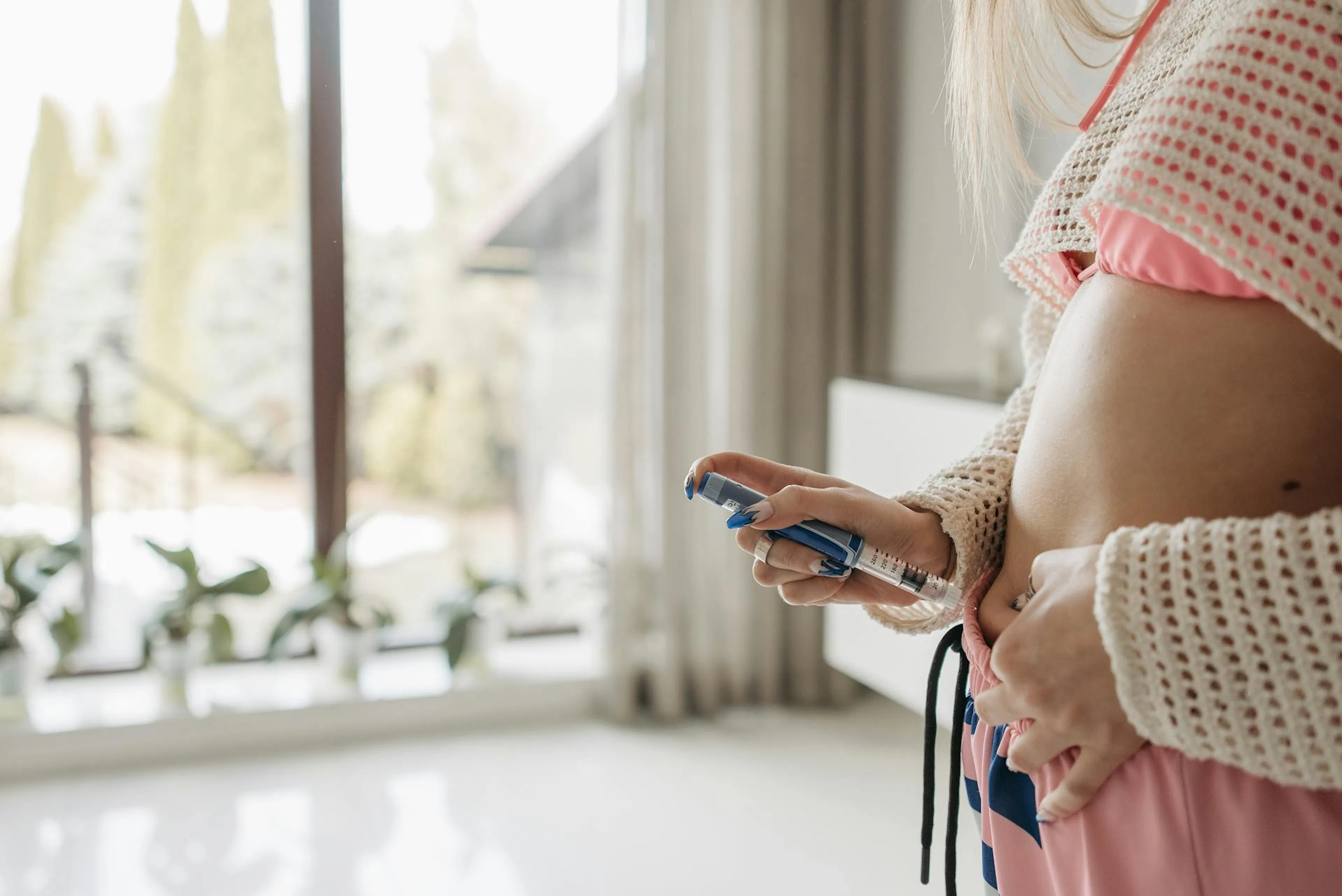
Subcutaneous vs Intramuscular Injection
There are two injection routes used in practice:
Subcutaneous (SubQ) — the standard approach
- Reconstitute BPC-157 in bacteriostatic water as directed by your provider
- Inject under the skin in the abdomen, away from scar tissue
- Rotate injection sites to prevent localised irritation
- BPC-157 is water-stable and does not require acetate buffers — practical for daily use
Intramuscular (IM) — for localised muscle injury
- Used when targeting a specific muscle group directly
- Less common in research protocols; subcutaneous produces reliable systemic absorption
- Requires greater technique and carries a marginally higher risk of injection site reaction
Who injection is best suited for:
- Tendon, ligament, or muscle injuries
- Post-surgical tissue recovery
- Bone healing support
- Systemic anti-inflammatory goals
- Any indication where the target tissue is not the GI tract
Practical considerations:
- Requires comfort with self-injection or clinical administration
- Sterile preparation is non-negotiable — contaminated peptide solutions carry real infection risk
- Quality of the compound matters enormously; see Research Peptides vs Pharmaceutical Grade: Why the Difference Could Harm You
Oral BPC-157: The Right Tool for Gut Health and GI Repair
Oral BPC-157 is not a compromise. For gut-targeted indications, it may be the superior route — because high local concentrations in the GI tract are exactly what you want.
BPC-157 naturally originates from gastric juice. Its cytoprotective effects on the intestinal lining have been consistently demonstrated in animal models across multiple decades of research.6 When taken orally, the peptide acts directly on the mucosal tissue it is designed to protect — repairing tight junctions, reducing inflammatory cytokines, and supporting the microbiome environment.
PL BioScience has advanced an oral BPC-157 formulation (designated PL-10) to Phase II clinical trials for inflammatory bowel disease — representing the most clinically advanced human development of oral BPC-157 to date.3 Human peer-reviewed results from these trials are pending, but the preclinical rationale is strong.
For a deeper look at how BPC-157 interacts with the gut, see BPC-157 and the Gut: How This Peptide Repairs the Intestinal Lining and Reduces Inflammation.
Forms of Oral BPC-157
- Capsules — most common; enteric-coated versions offer some protection from gastric degradation
- Liquid / sublingual drops — faster mucosal contact; useful for upper GI targeting
- Troches — buccal absorption, limited evidence specific to BPC-157
Who oral delivery is best suited for:
- Leaky gut / intestinal permeability
- Inflammatory bowel disease (IBD, Crohn's, ulcerative colitis)
- NSAID-induced gastric damage or ulcers
- Irritable bowel syndrome (IBS)
- General GI maintenance alongside other therapies
- Patients who cannot or will not self-inject
Practical considerations:
- Oral bioavailability is lower for systemic goals — do not expect injection-equivalent tendon or joint results
- Dosing protocols typically require three to ten times the injectable dose to achieve comparable GI effects
- Product quality varies widely in the oral supplement market — sourcing from a licensed compounding pharmacy is essential
Nasal BPC-157: Emerging Option, Limited Evidence
Nasal BPC-157 is the third delivery route — and the least established. That does not mean it is irrelevant. It means the evidence base is still developing.
Intranasal administration leverages the highly vascularised nasal mucosa for systemic absorption. It bypasses first-pass hepatic metabolism — which oral delivery does not — allowing a greater proportion of the absorbed peptide to remain intact as it enters circulation.7 The olfactory pathway also provides a potential direct nose-to-brain route, bypassing the blood-brain barrier — a property that has generated interest for neuropeptides and potential neurological applications.
Established research on intranasal peptide delivery exists for oxytocin, insulin, and several neuropeptides. For BPC-157 specifically, intranasal data remains limited. BPC-157 has a molecular weight of approximately 1,419 Da — on the larger end for nasal mucosal absorption — which may constrain bioavailability compared to smaller peptides like Semax (which weighs 604 Da and is specifically designed for nasal delivery).8
Who nasal delivery may be relevant for (research context):
- Neurological or brain-adjacent applications
- Patients for whom injection is contraindicated
- Situations requiring rapid onset with non-invasive administration
- Research protocols studying nose-to-brain peptide pathways
What to be realistic about:
- No peer-reviewed human trials on intranasal BPC-157 exist as of 2026
- Nasal absorption of BPC-157 is less predictable than for smaller peptides
- Dosing standardisation for nasal BPC-157 is not established
- Consult a licensed provider before considering this route
Peptide Delivery Method Comparison Table

How to Choose the Right BPC-157 Delivery Method for Your Goal
Matching the delivery method to the clinical goal is the single most important decision in BPC-157 therapy.
Choose injectable BPC-157 if:
- Your target is a tendon, ligament, joint, or muscle injury
- You need systemic anti-inflammatory or tissue repair effects
- Speed and reliability of delivery matter
- You are working within a structured peptide therapy protocol with a licensed provider
Choose oral BPC-157 if:
- Your primary concern is gut health — leaky gut, IBD, IBS, gastric ulcers
- You want high local GI concentrations, not systemic distribution
- You prefer non-invasive administration for long-term or maintenance use
- You are combining BPC-157 with another systemic peptide therapy
Consider nasal delivery only if:
- Neurological applications are the clinical focus
- A licensed provider explicitly recommends it based on your presentation
- Injection is contraindicated and oral delivery is insufficient
Do not choose a delivery method based on convenience alone. A more convenient method that does not reach your target tissue is not convenience — it is wasted time and money.
For guidance on the broader landscape of peptides used in metabolic and hormonal health, see Peptides for Insulin Resistance: GLP-1, Tesamorelin & Emerging Compounds.
Peptide therapy, done properly.
Personalized treatment recommendations based on your labs—not trends. Work with experienced clinicians to develop a peptide protocol that fits your biology.

Dosing Protocols by Delivery Method
These are general reference ranges drawn from published preclinical research and compounding guidelines. They are not a prescription. Your licensed provider will determine the appropriate dose, frequency, and duration based on your clinical profile.
Injectable BPC-157
- Standard dose range: 200–500 mcg per day
- Administration: Subcutaneous injection, once daily or split into two doses
- Cycle length: Typically 4–12 weeks, followed by an assessment period
- Injection site: Abdominal subcutaneous tissue; rotate sites daily
Oral BPC-157
- Standard dose range: 500 mcg – 2,000 mcg per day
- Administration: Capsule or liquid form, taken on an empty stomach where possible
- Cycle length: Often ongoing for GI maintenance; 8–16 weeks for acute GI conditions
- Timing: Morning or split into two doses; empty stomach may improve mucosal contact
Nasal BPC-157
- Dose range: Not established in human trials; typically 100–300 mcg per administration in research contexts
- Administration: Intranasal spray; wait 60 seconds between sprays in the same nostril to prevent oversaturation9
- Protocol: Consult a licensed provider; do not self-initiate
Dosing data for BPC-157 in humans is limited. The above ranges are drawn from animal research and compounding guidelines. They do not represent FDA-approved dosing. Always work with a licensed clinician.
Safety, Sourcing, and Why Medical Oversight Is Non-Negotiable
BPC-157 has a strong safety record in animal studies — notably, the lethal dose (LD1) has not been achieved across decades of preclinical research, and it has been used in human ulcerative colitis and multiple sclerosis trials without reported toxicity.6 But the absence of adverse events in animals does not translate directly to human safety, particularly at unregulated doses from unverified sources.
The biggest safety risks with BPC-157 are not the peptide itself. They are:
- Contaminated or mislabelled compounded products — research-grade vs pharmaceutical-grade manufacturing matters enormously
- Incorrect dosing — without clinical oversight, patients routinely underdose (no effect) or overdose (unknown risk)
- Drug interactions — particularly relevant if you are on GLP-1 therapy, immunosuppressants, or anti-inflammatory medications; see Peptide Therapy Side Effects FAQ
- Regulatory status — the FDA's 2026 compounding landscape has shifted; understand what applies to you; see FDA Compounded Peptides 2026: What the Crackdown Means for Your Access
Only obtain BPC-157 through a licensed Meto provider. Your provider will assess whether peptide therapy is appropriate for your goals, select the right delivery method, and monitor your response over time. This is not optional bureaucracy — it is how you get results safely.
Work with a licensed Meto provider →
Conclusion
The BPC-157 injection vs oral peptide decision is not about which is better in isolation. It is about which is right for your specific goal.
Injection delivers the highest systemic bioavailability — the clear choice for musculoskeletal repair, tendon healing, and any target tissue outside the GI tract. Oral delivery concentrates the peptide where it matters most for gut health — a genuine therapeutic advantage, not a compromise. Nasal delivery is an emerging option with biological rationale but limited human evidence; approach it with appropriate caution.
Whatever route you choose, the quality of the compound and the guidance of a licensed clinician are not negotiable. BPC-157 sourced from unverified channels without clinical oversight is not peptide therapy — it is a gamble with your biology.
Get started with a Meto provider today →
Frequently Asked Questions
Is oral BPC-157 as effective as injectable BPC-157?
It depends on the goal. For gut-targeted applications — leaky gut, IBD, gastric repair — oral BPC-157 may actually be superior, because it delivers high concentrations directly to the target tissue. For systemic goals like tendon or muscle healing, injectable BPC-157 wins clearly. Oral bioavailability for systemic purposes is estimated at 10–30% of injectable delivery.
Can I take BPC-157 orally and by injection at the same time?
Some clinicians use both simultaneously — oral dosing for ongoing gut support and injectable for an acute musculoskeletal injury. This dual-route approach should only be initiated under provider supervision. Combined dosing increases total peptide load and may alter the risk profile, particularly regarding interactions with other therapies.
How long does it take for BPC-157 injection to work?
Animal studies show accelerated healing responses within days of initiating injectable BPC-157. Human timelines are less defined. For acute soft tissue injuries, clinical users typically report noticeable changes within two to four weeks. For chronic conditions, full assessment should occur after a complete 8–12 week cycle. Individual response varies.
Is nasal BPC-157 safer than injection?
Not necessarily safer — just different in risk profile. Nasal delivery avoids injection site risks (infection, bruising, irritation) but introduces nasal mucosal irritation and formulation stability concerns. More importantly, nasal BPC-157 lacks human clinical data. The absence of documented adverse events reflects the absence of studies, not proven safety. A licensed provider can help you weigh these factors.
Does BPC-157 interact with GLP-1 medications like semaglutide?
Formal drug interaction data does not exist for BPC-157 and GLP-1 receptor agonists. Both classes influence gastrointestinal function, and concurrent use should be disclosed to and monitored by your prescribing provider. See GLP-1 Peptides Explained for broader context on GLP-1 therapy.
Where can I get pharmaceutical-grade BPC-157?
Only through a licensed compounding pharmacy operating under a valid prescription from a qualified provider. Research-grade peptides sold online are not manufactured to the same purity or sterility standards and carry real risks. SeeResearch Peptides vs Pharmaceutical Grade for what the distinction means in practice.
Recommended For You

Hexarelin: The Cardioprotective Growth Hormone Peptide That Mainstream Providers Overlook
Hexarelin is the only GHRP with a dual cardioprotective mechanism via CD36 receptors. This deep dive covers the science, protocols, comparisons, and who benefits from this overlooked peptide.

The Exercise and Peptide Protocol: How to Get Maximum Results Combining Training With Therapy
The right exercise peptide therapy protocol doesn't just complement your treatment — it determines your results. This guide covers training type, peptide timing, week-by-week structure, and clinical considerations for GLP-1s, GH secretagogues, and tissue repair peptides.

Peptide Therapy and Cancer: Addressing the Risks, the Evidence, and What Patients Should Know Before Starting
Peptide therapy cancer risk evidence is nuanced — and most telehealth platforms skip the conversation entirely. This article breaks down what the research shows for GLP-1s, GH secretagogues, and BPC-157, who carries elevated risk, and the screening every patient should complete before starting a protocol.