Relaxation Exercises to Help You Fall Asleep Fast
By Karyn O.

Science-Backed Techniques That Calm the Nervous System and Improve Sleep Onset
Executive Summary
- Difficulty falling asleep is often caused by hyperarousal—an overactive stress response that keeps the brain alert at night.
- Relaxation exercises work by activating the parasympathetic nervous system, lowering heart rate, easing muscle tension, and reducing racing thoughts.
- The fastest techniques include 4-7-8 breathing and diaphragmatic breathing.
- For chronic stress or anxiety-driven insomnia, progressive muscle relaxation (PMR), body scan meditation, and cognitive shuffle techniques are especially effective.
- Relaxation is most powerful when practiced nightly as part of a wind-down routine—not only when you “can’t sleep.”
- If insomnia lasts more than 3 months or includes loud snoring, gasping, or severe daytime fatigue, medical evaluation is recommended.
Why Relaxation Exercises Help You Fall Asleep
The Sleep-Onset Problem: Hyperarousal
Insomnia is not simply a “lack of sleepiness.” Research consistently shows it is a disorder of physiological and cognitive hyperarousal—meaning the brain and body remain in a stress-activated state at bedtime.
Common signs of hyperarousal:
- Racing thoughts
- Elevated heart rate
- Muscle tension
- Nighttime anxiety
- Feeling “tired but wired”
Stress hormones like cortisol and activation of the sympathetic nervous system (“fight-or-flight”) delay sleep onset and fragment sleep.
The Science: Activating the Parasympathetic Nervous System
Relaxation exercises shift the body into parasympathetic dominance—the “rest-and-digest” state.
Physiological effects include:
- Lower heart rate
- Reduced blood pressure
- Increased heart rate variability (HRV)
- Reduced muscle tension
- Decreased cortisol levels
Breathing exercises, in particular, stimulate the vagus nerve, which plays a central role in calming the nervous system.
This shift makes it biologically easier for the brain to transition into sleep.
Who Benefits Most?
Relaxation techniques are particularly effective for:
- Stress-related insomnia
- Anxiety disorders
- Perimenopausal or menopausal sleep disruption
- High-performing individuals with mental overactivity
- People who wake frequently at night due to stress
They are also commonly integrated into Cognitive Behavioral Therapy for Insomnia (CBT-I)—the gold standard non-pharmacologic treatment.

Quick Comparison: Which Relaxation Technique Is Best for You?
The Most Effective Relaxation Exercises to Fall Asleep
1. 4-7-8 Breathing (Best for Fast Sleep Onset)
What it is: A controlled breathing technique popularized by Dr. Andrew Weil.
Why it works: Slow exhalation increases parasympathetic tone and reduces sympathetic activation. It also regulates carbon dioxide levels, which influence relaxation.
How to do it:
- Inhale quietly through your nose for 4 seconds.
- Hold your breath for 7 seconds.
- Exhale slowly through your mouth for 8 seconds.
- Repeat for 4–8 cycles.
Best for: Anxiety, pre-sleep nervousness, racing heartbeat.
Time required: 2–4 minutes.
2. Progressive Muscle Relaxation (PMR)
What it is: A structured technique developed by Edmund Jacobson in the 1920s.
Why it works: Insomnia is associated with increased muscle tension. PMR systematically reduces physical arousal. Studies show it improves sleep quality and reduces sleep latency.
How to do it:
- Starting at your feet, tense muscles for 5 seconds.
- Release completely for 10 seconds.
- Move upward: calves → thighs → abdomen → shoulders → arms → face.
- Focus on the sensation of release.
Best for: People who carry stress physically.
Time required: 10–15 minutes.
3. Body Scan Meditation
What it is: A mindfulness technique involving attention to bodily sensations.
Why it works: Redirects focus from worry to physical awareness, reducing cognitive arousal.⁹ Mindfulness-based interventions have shown meaningful improvements in insomnia severity.¹⁰
How to do it:
- Lie comfortably.
- Slowly scan attention from toes to head.
- Notice sensations without judgment.
- If thoughts arise, gently return attention to the body.
Best for: Nighttime awakenings and rumination.
Time required: 5–15 minutes.
4. Cognitive Shuffle (Cognitive Distraction)
What it is: A CBT-I–based technique using neutral, random imagery.
Why it works: Insomnia often involves repetitive thought loops. Random mental images interrupt rumination by occupying working memory.
How to do it:
- Imagine unrelated, neutral objects (e.g., apple, mailbox, cloud, blue bicycle).
- Keep images simple and emotionally neutral.
- Allow them to drift randomly.
Best for: Racing thoughts at bedtime.
Time required: 5–10 minutes.
5. Guided Imagery
What it is: Visualization of calming scenes.
Why it works: Activates brain regions involved in sensory relaxation and reduces limbic reactivity.
How to do it:
- Imagine a safe, calming environment (beach, forest, floating on water).
- Engage all senses: sounds, temperature, textures.
- Breathe slowly while maintaining the image.
Best for: Anxiety and stress.
Time required: 10–15 minutes.
6. Yoga Nidra
What it is: A structured guided relaxation practice often called “yogic sleep.”
Why it works: Promotes deep parasympathetic activation and has been shown to reduce stress and improve sleep quality.
Best for: Chronic stress, burnout, insomnia resistant to simple breathing exercises.
Time required: 15–25 minutes.
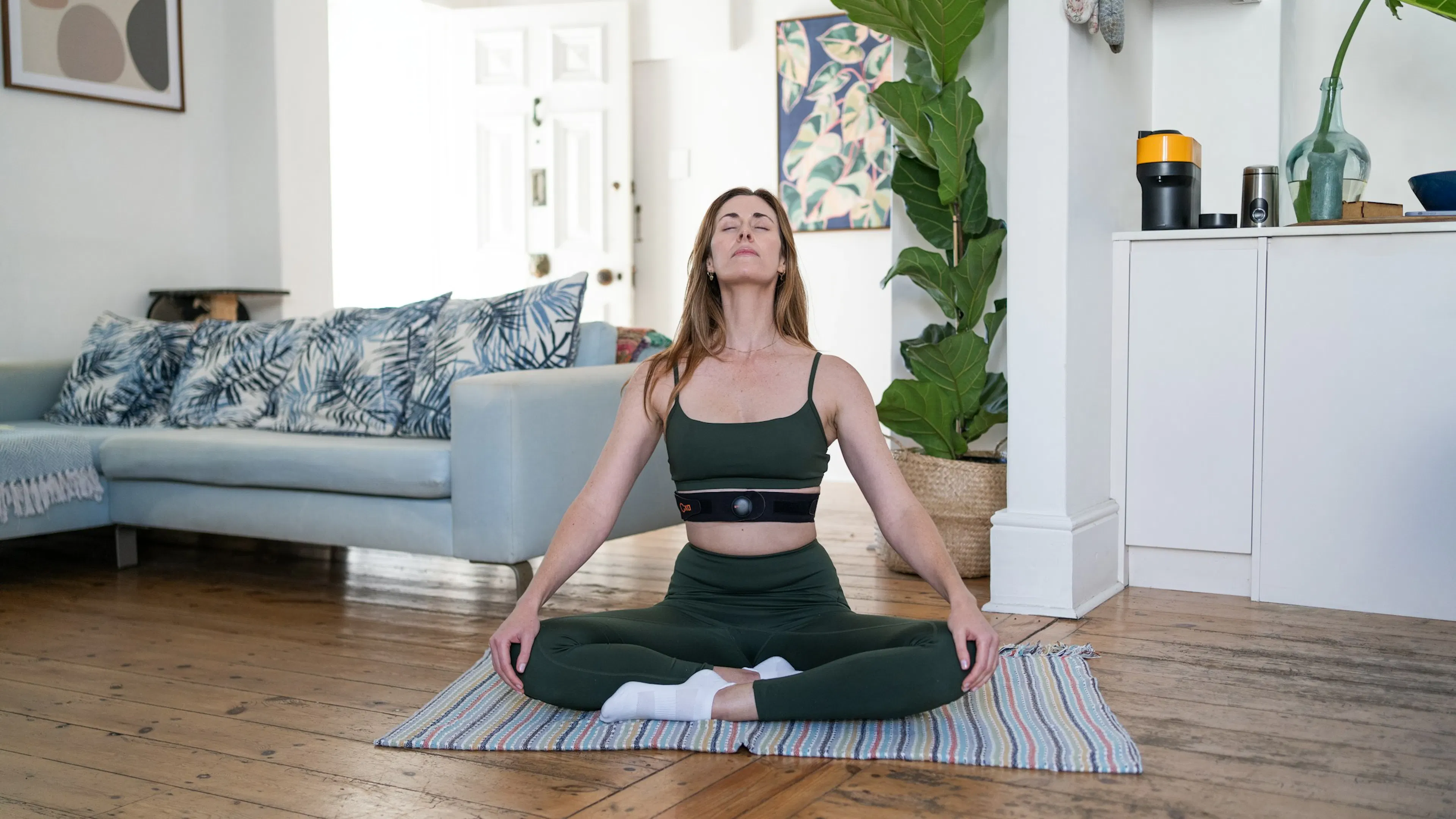
7. Diaphragmatic (Belly) Breathing
What it is: Slow breathing that engages the diaphragm rather than the chest.
Why it works: Enhances vagal tone and reduces sympathetic activation. Studies show it reduces cortisol and improves relaxation.
How to do it:
- Place one hand on your chest, one on your abdomen.
- Inhale so only the abdomen rises.
- Exhale slowly.
- Continue for 5–10 minutes.
How to Build a 10-Minute Nighttime Relaxation Routine
Step 1: Dim lights 30–60 minutes before bed.
Step 2: Practice 4-7-8 breathing for 3 minutes.
Step 3: Transition into a body scan or PMR for 7 minutes.
Consistency is key. Studies show relaxation techniques are most effective when practiced regularly, not just during severe insomnia episodes.
Common Mistakes That Reduce Effectiveness
- “Trying” too hard to fall asleep
- Using relaxation only during insomnia spikes
- Keeping bright screens on before practice
- Practicing inconsistently
- Expecting immediate results after one night
Like exercise, relaxation training strengthens with repetition.
When Relaxation Alone Isn’t Enough
Consult a healthcare professional if you experience:
- Insomnia lasting more than 3 months
- Loud snoring or gasping (possible sleep apnea)
- Severe daytime sleepiness
- Restless legs symptoms
- Hormonal sleep disruption
CBT-I remains the first-line therapy for chronic insomnia.
Relaxation vs Sleep Hygiene
Key Takeaways
- Insomnia is often a hyperarousal disorder, not a lack of fatigue.
- Relaxation exercises activate the parasympathetic nervous system.
- Breathing techniques work fastest; PMR and mindfulness work deeply.
- Consistency matters more than perfection.
Persistent insomnia requires evaluation.
Recommended For You

FDA Peptide Decision 2026: The Final Vote on BPC-157, TB-500, MOTS-c and More — What It Means for You
Across July 23–24, 2026, the FDA's advisory committee recommended six peptides for legal compounding — BPC-157, KPV, TB-500, MOTS-c, epitalon, and Semax — and rejected one, emideltide (DSIP). Here's the complete scorecard, what it means, what it doesn't, and what to do next.

FDA Advisory Committee Votes to Ease Peptide Restrictions: What the July 2026 Vote on BPC-157, KPV, TB-500, and MOTS-c Actually Means
An FDA advisory committee voted on July 23, 2026 to recommend easing restrictions on four peptides — BPC-157, KPV, TB-500, and MOTS-c. Here's what that vote actually does, why it isn't an approval, and what it means for your health.

GLP-1 and Fertility: Emerging Evidence for Women With Obesity, Insulin Resistance, and PMOS
GLP-1 fertility research in women with PMOS and insulin resistance shows consistent improvements in ovulation, menstrual regularity, and androgen levels. This deep dive covers the clinical evidence, mechanisms, who benefits most, and how to approach a PMOS fertility metabolic plan.