Compounded Semaglutide FDA 2026: The Crackdown, Safety Risks & Why Lab Testing Matters
By Karyn O.

TL;DR — Key Takeaways
- The FDA has intensified enforcement on compounded GLP-1 drugs as shortages evolve and safety concerns mount.
- Compounded semaglutide is not FDA-approved, and quality can vary significantly between providers.
- The end (or tightening) of official shortage allowances is reshaping what is legally permissible.
- Reported risks include incorrect dosing, impurities, and use of non-equivalent salt forms.
- Independent, third-party lab testing is emerging as a critical safeguard for patients navigating this space.
- Patients should demand transparency, Certificates of Analysis (COAs), and clear sourcing before use.
The FDA’s 2026 Crackdown on Compounded GLP-1s Explained
Over the past two years, GLP-1 receptor agonists—particularly semaglutide and tirzepatide—have moved from niche metabolic therapies to mainstream demand drivers. Predictably, supply constraints followed.
During the height of the shortage, U.S. compounding pharmacies were permitted under specific regulatory frameworks to produce versions of semaglutide. However, what began as a stopgap has now become a rapidly expanding, loosely standardized ecosystem—one the FDA is increasingly scrutinizing.
In 2025–2026, the agency escalated enforcement through:
- Warning letters to compounding pharmacies and telehealth platforms
- Increased inspection activity
- Clarification of rules around bulk compounding and active pharmaceutical ingredients (APIs)
The central issue is not demand—it is consistency, safety, and regulatory boundaries.
The FDA has been explicit: compounded drugs are not evaluated for safety, efficacy, or quality in the same way as approved medications. That distinction, once overlooked in consumer messaging, is now at the heart of regulatory action.
The Rise of Compounded GLP-1s During the Shortage Era
To understand the current crackdown, it’s important to understand how we got here.
Compounded semaglutide surged in popularity due to three forces:
- Access gaps
Branded GLP-1s like Ozempic® and Wegovy® were frequently unavailable or delayed. - Cost pressures
Compounded alternatives were often marketed at a fraction of the price. - Telehealth acceleration
Direct-to-consumer prescribing models made access frictionless.
This created a powerful narrative: “same drug, lower price, easier access.”
But clinically and pharmaceutically, that equivalence is not guaranteed.
FDA Compounding Pharmacy Rules (Made Simple)
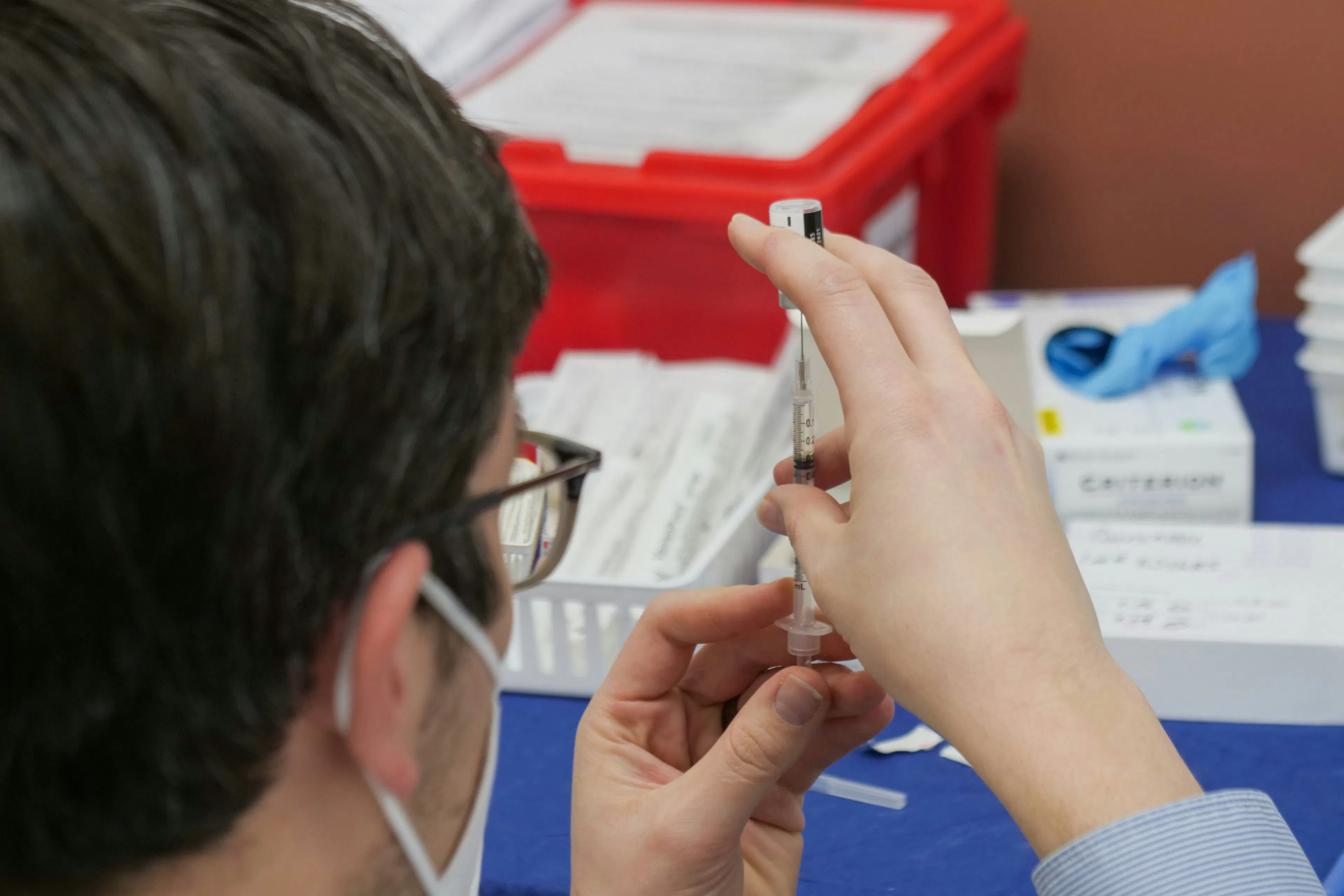
When Is Compounding Legal?
Under U.S. law, compounding is permitted when:
- A drug is listed on the FDA’s drug shortage list, or
- A physician determines a patient needs a customized formulation
These activities typically fall under:
- 503A pharmacies (patient-specific prescriptions)
- 503B outsourcing facilities (larger-scale production under stricter oversight)
What Changed in 2025–2026?
As supply constraints began to stabilize, the regulatory tolerance that enabled widespread compounding began to narrow.
Key shifts include:
- Re-evaluation of semaglutide’s shortage status
- Increased scrutiny of pharmacies producing in bulk
- Enforcement against entities effectively manufacturing, not compounding
What Pharmacies Are NOT Allowed to Do
- Produce large quantities without patient-specific prescriptions (outside 503B allowances)
- Market compounded drugs as FDA-approved equivalents
- Use non-equivalent active ingredients (e.g., unverified salt forms)
This is where many operators have fallen into regulatory gray—or outright noncompliance—zones.
Similar Read: Switching from Compounded GLP-1s to FDA-Approved Medications: What You Need to Know
Compounded GLP-1 Safety — What the Data Is Starting to Show
The concern is not theoretical.
Emerging reports and regulatory communications point to variability in:
- Dosage accuracy (under- or overdosing)
- Purity levels (presence of impurities or degradation products)
- Formulation consistency
The FDA has specifically warned about:
- Use of semaglutide sodium or acetate salts, which are not the same as the approved base compound
- Adverse events linked to dosing errors and mislabeled concentrations
From a metabolic standpoint, even small deviations in GLP-1 dosing can have meaningful clinical consequences:
- Subtherapeutic dosing → poor glycemic or weight outcomes
- Excess dosing → increased gastrointestinal side effects, dehydration risk
The variability is the risk.
Why Two Compounded Semaglutide Prescriptions Can Be Completely Different

Unlike branded pharmaceuticals, compounded medications lack uniform manufacturing standards across providers.
Differences can arise from:
- Pharmacy classification (503A vs 503B)
- API sourcing (domestic vs international suppliers)
- Compounding technique and quality controls
- Storage and stability practices
Two patients receiving “semaglutide” from different sources may, in reality, be receiving materially different products.
This is not widely understood by patients—and often not clearly communicated.
Independent Lab Testing — The Missing Layer of Trust
This is where independent verification becomes essential.
What Independent Testing Verifies
A properly conducted third-party lab test evaluates:
- Identity — Is the compound actually semaglutide?
- Purity — Are there contaminants, residual solvents, or degradation products?
- Potency — Does the dosage match the label?
These are fundamental pharmaceutical quality parameters.
Why FDA Oversight Isn’t Enough for Compounded Drugs
The FDA does not:
- Approve compounded drugs
- Test each batch
- Guarantee uniformity across providers
Oversight is facility-level, not product-level.
That leaves a gap—one that independent testing can help fill.
Real-World Implications for Patients
Without verification:
- You may be underdosing and not know why treatment “isn’t working”
- You may be overdosing, increasing side effect risk
- You may be exposed to impurities without visibility
Independent testing transforms this from blind trust into informed decision-making.
What Patients Should Look For Before Using Compounded Semaglutide
If you are considering or currently using compounded GLP-1s, evaluate your provider carefully.
Key questions to ask:
- Do they provide third-party Certificates of Analysis (COAs)?
- Is the pharmacy clearly identified as 503A or 503B?
- Is the source of the active ingredient disclosed?
- Are they transparent about formulation and dosing concentration?
- Do they avoid misleading claims like “FDA-approved”?
If these answers are unclear, that is itself a signal.
For a deeper breakdown of how compounded GLP-1s work and what to evaluate, see Meto’s foundational overview: https://meto.co/
Frequently Asked Questions About Compounded GLP-1s
Is compounded semaglutide FDA approved?
No. Compounded semaglutide is not FDA-approved and does not undergo the same evaluation as branded drugs.
Is compounded semaglutide safe in 2026?
It can be used in certain contexts, but safety depends heavily on quality, sourcing, and verification—which are not standardized.
Why is the FDA cracking down?
Due to concerns about quality variability, misleading marketing, and regulatory overreach by some providers.
Can you still legally get compounded GLP-1?
Yes, but under stricter conditions. Legality depends on shortage status and compounding rules compliance.
Are compounded GLP-1s the same as Ozempic or Wegovy?
Not necessarily. Even when chemically similar, differences in formulation, purity, and dosing can exist.
Is compounded tirzepatide affected too?
Yes. As demand grows, similar regulatory scrutiny is being applied.
The Future of Compounded GLP-1s After the FDA Crackdown
Looking ahead, several trends are likely:
- Reduced availability as enforcement increases
- Greater differentiation between compliant and non-compliant providers
- Increased reliance on verification mechanisms, including lab testing
- Continued role of telehealth—but under tighter regulatory frameworks
The market is not disappearing. It is maturing under pressure.
A Clinical Perspective: Risk vs Benefit in the Real World
From a metabolic care standpoint, the question is not whether compounded GLP-1s are “good” or “bad.”
It is whether they are:
- Appropriate for the patient, and
- Reliable in their formulation
There are scenarios where compounded options may be considered:
- Limited access to branded therapies
- Cost constraints
- Need for tailored dosing
But these must be weighed against:
- Variability risk
- Lack of standardization
- Limited regulatory oversight
The clinical priority remains unchanged: predictability and safety of treatment.
Meto’s Perspective: Transparency Over Assumption
At Meto, our position is straightforward:
Access alone is not enough.
Verification is the new baseline.
As the compounded GLP-1 ecosystem evolves, patients deserve:
- Clarity on what they are taking
- Confidence in its composition
- Tools to independently verify quality
Independent lab testing is not about fear—it is about restoring visibility in a system where variability exists.
In an environment where two identical prescriptions can yield different outcomes, transparency is no longer optional—it is foundational.
Conclusion
The FDA’s compounding crackdown is not a disruption—it is a correction.
It reflects a system catching up to rapid demand, technological shifts, and a blurred line between compounding and manufacturing.
For patients, the takeaway is simple:
- Do not assume equivalence
- Do not rely solely on access
- Demand verification
Because in metabolic care, what you take matters just as much as how consistently you can trust it.
Recommended For You
FDA Peptide Decision 2026: The Final Vote on BPC-157, TB-500, MOTS-c and More — What It Means for You
Across July 23–24, 2026, the FDA's advisory committee recommended six peptides for legal compounding — BPC-157, KPV, TB-500, MOTS-c, epitalon, and Semax — and rejected one, emideltide (DSIP). Here's the complete scorecard, what it means, what it doesn't, and what to do next.
FDA Advisory Committee Votes to Ease Peptide Restrictions: What the July 2026 Vote on BPC-157, KPV, TB-500, and MOTS-c Actually Means
An FDA advisory committee voted on July 23, 2026 to recommend easing restrictions on four peptides — BPC-157, KPV, TB-500, and MOTS-c. Here's what that vote actually does, why it isn't an approval, and what it means for your health.

GLP-1 and Fertility: Emerging Evidence for Women With Obesity, Insulin Resistance, and PMOS
GLP-1 fertility research in women with PMOS and insulin resistance shows consistent improvements in ovulation, menstrual regularity, and androgen levels. This deep dive covers the clinical evidence, mechanisms, who benefits most, and how to approach a PMOS fertility metabolic plan.